
Learning how to clean and season a cast iron skillet is one of the easiest ways to keep your favorite pan cooking like new for years to come. Cast iron is incredibly durable, versatile, and perfect for everything from searing steaks and burgers to baking cornbread and cooking vegetables.
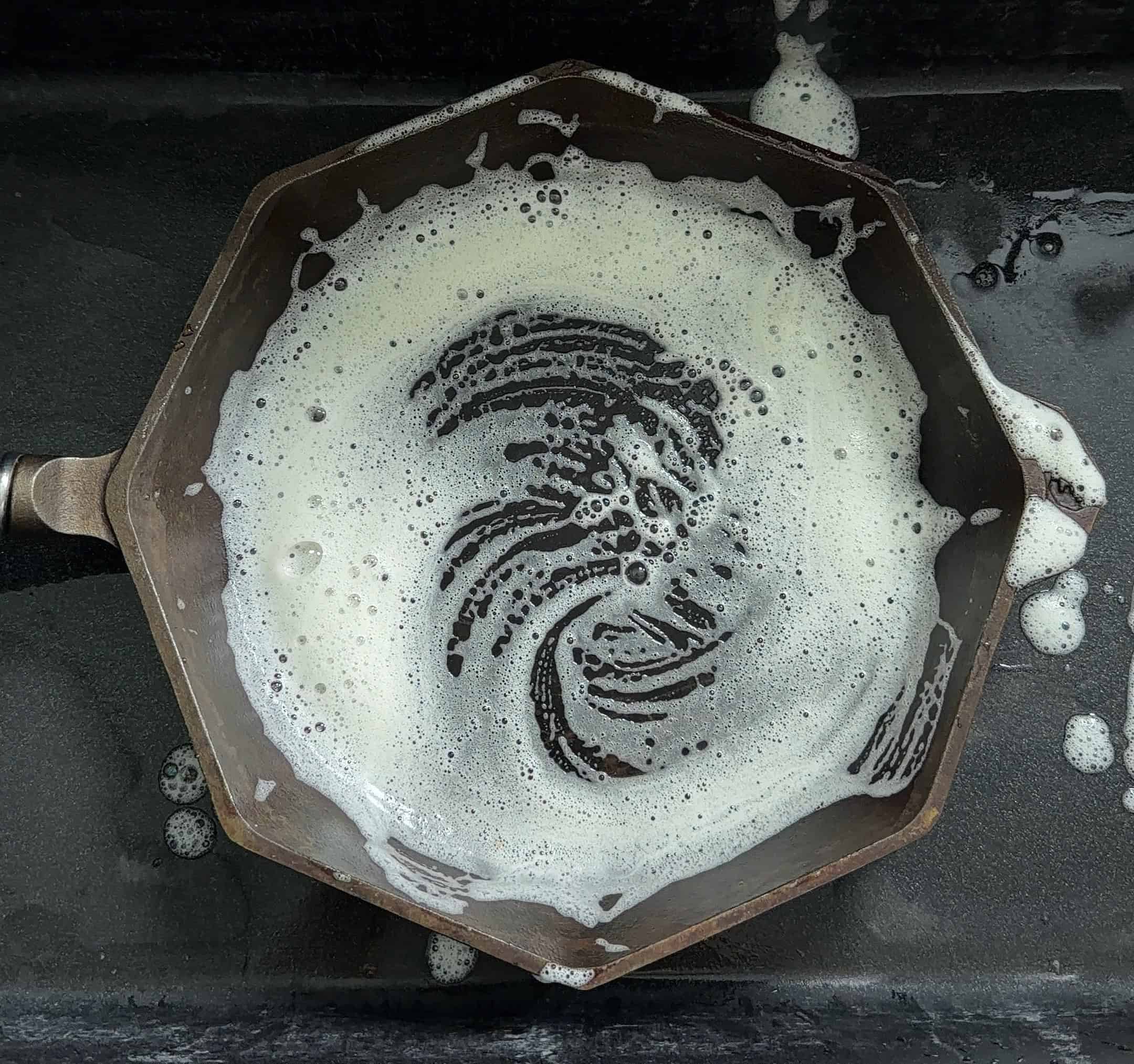
The key to maintaining cast iron is simple: wash it, dry it, and lightly oil it.
While cast iron has a reputation for being difficult to clean, the process is actually pretty simple once you know what to do. You don't need a complicated collection of specialty products or hours of scrubbing after every meal.
In this guide, I'll show you how to properly clean a cast iron skillet, how to season cast iron, how to remove stuck-on food, and what to do if your skillet develops rust.
What Is Cast Iron Seasoning?
Before we get into cleaning, let's talk about what seasoning actually means.
Cast iron seasoning is a layer of oil that has been heated onto the surface of the skillet. Through a process called polymerization, the oil bonds to the iron and creates a protective cooking surface.
That seasoning helps give cast iron its naturally easy release surface while also protecting the pan from moisture and rust.
The best part is you continue building seasoning every time you cook with your cast iron.
Cooking with a little oil or fat helps add additional layers over time, so a well used cast iron skillet can actually get better with age.
How To Clean a Cast Iron Skillet
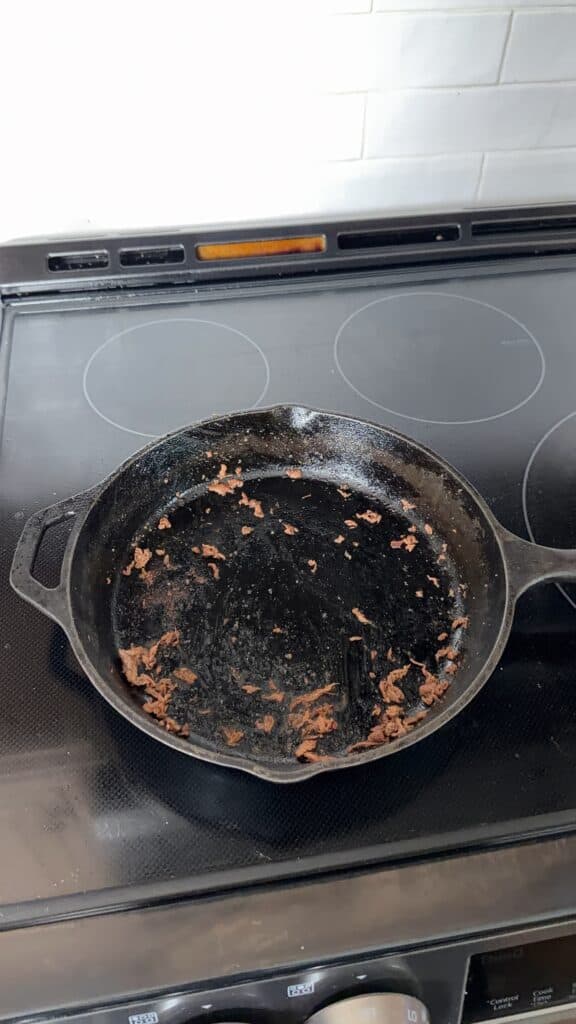
Step 1: Let the Skillet Cool
After cooking, allow the skillet to cool enough to handle safely.
You don't want to put a very hot cast iron skillet under cold water because sudden temperature changes can put unnecessary stress on the cookware.
Once it's safe to handle, you're ready to clean.
Step 2: Wash the Skillet
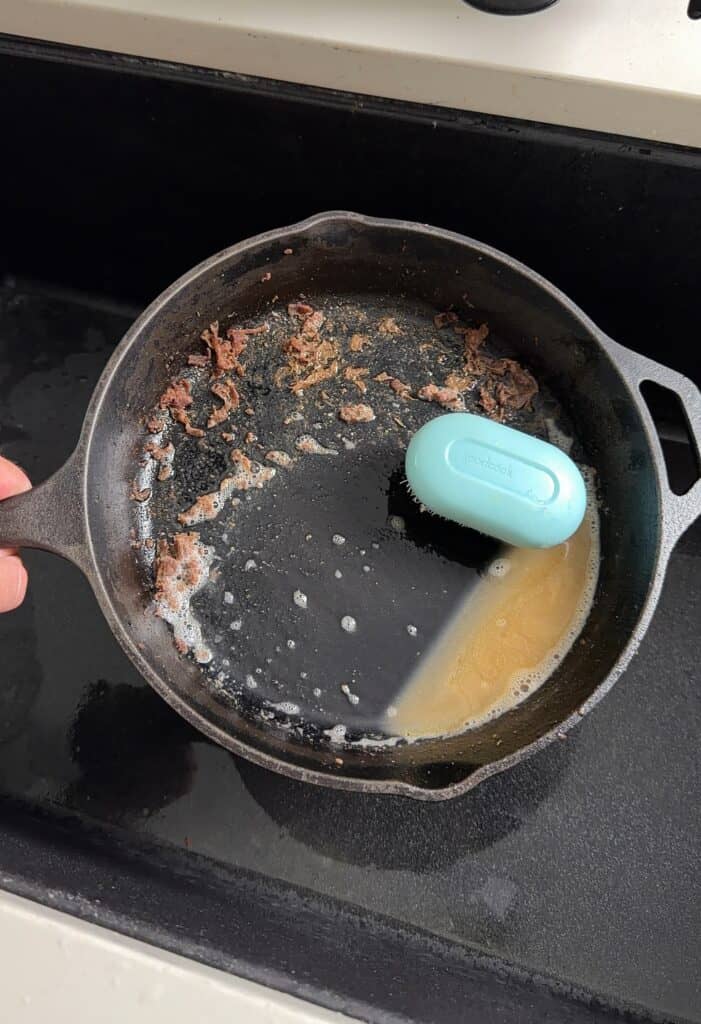
Rinse the skillet with warm water and use a stiff-bristled brush or non-scratch scrubber to remove food and grease.
A small amount of dish soap can be used if needed.
For everyday cleaning, you don't need to aggressively scrub the pan. The goal is simply to remove food residue while leaving the seasoning intact.
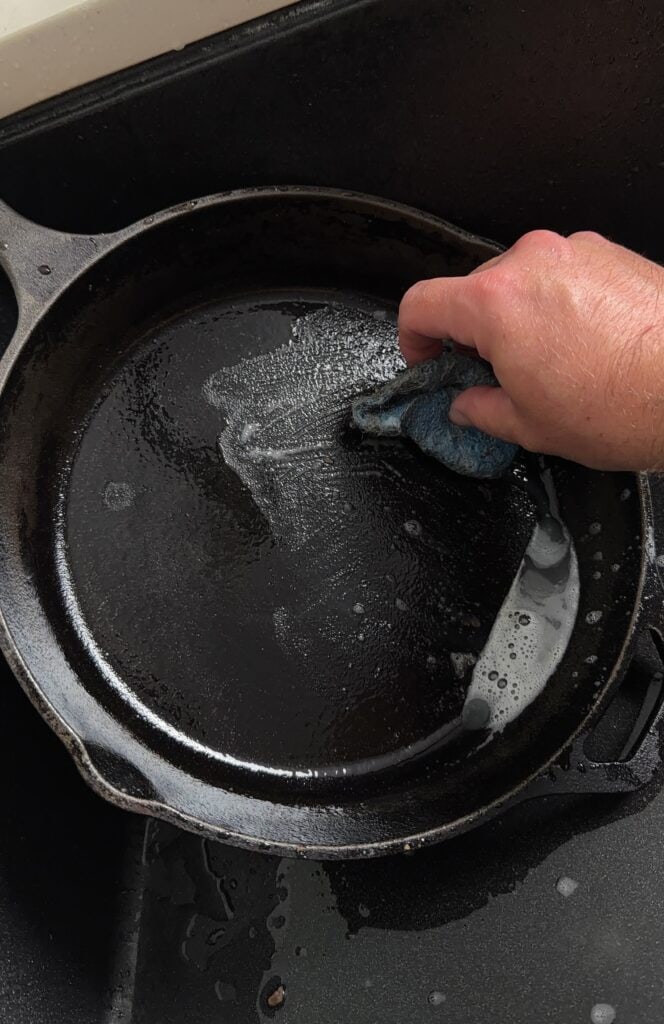
Step 3: Remove Stuck-On Food
Sometimes food is going to stick. That's just part of cooking.
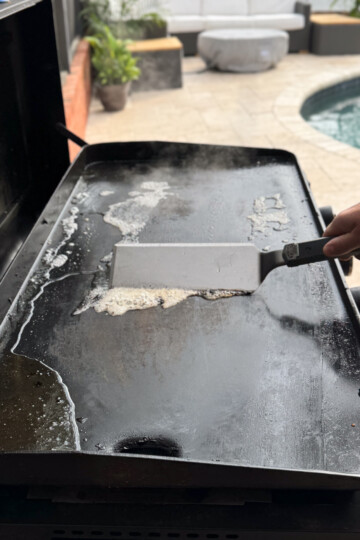
For stubborn bits, use a pan scraper to loosen the food.
Another easy method is to add a small amount of water to the skillet and bring it to a gentle simmer for about 3-5 minutes. This helps loosen stuck-on food so it can be scraped away more easily.
Once the food is removed, rinse the skillet thoroughly.
Step 4: Dry the Skillet Completely
This step is extremely important.
Cast iron and moisture are not a great combination. Leaving water sitting on the surface can eventually lead to rust.
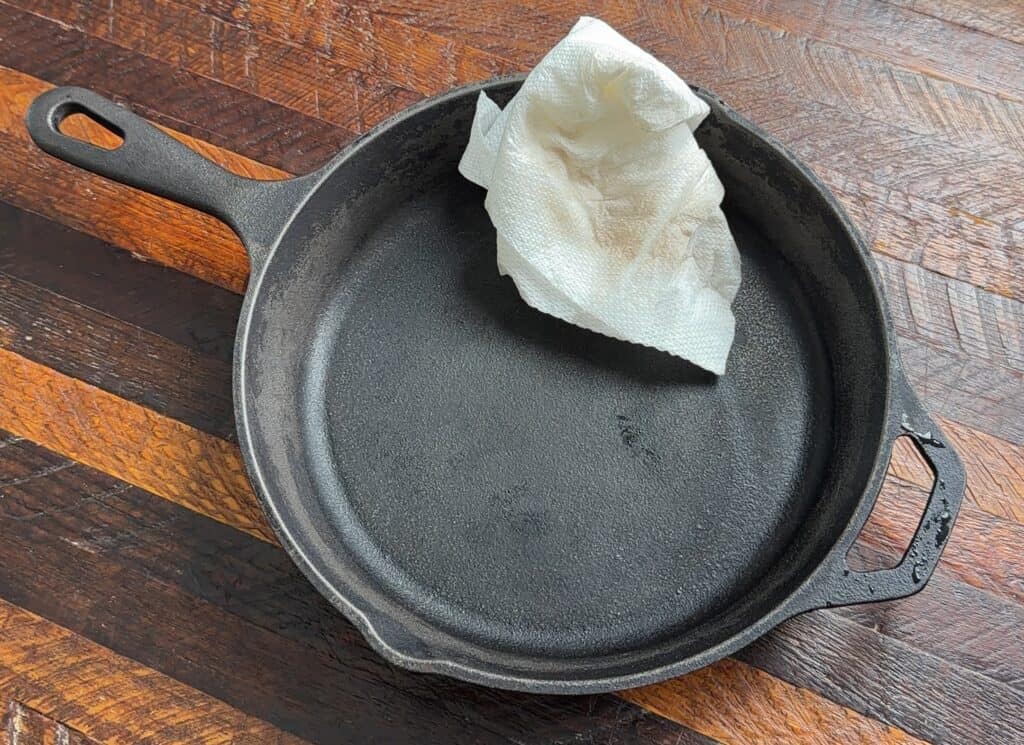
Dry the skillet thoroughly with a paper towel or lint-free towel.
For extra insurance, place the skillet over low heat on the stovetop for a few minutes to evaporate any remaining moisture.
Step 5: Lightly Oil the Skillet
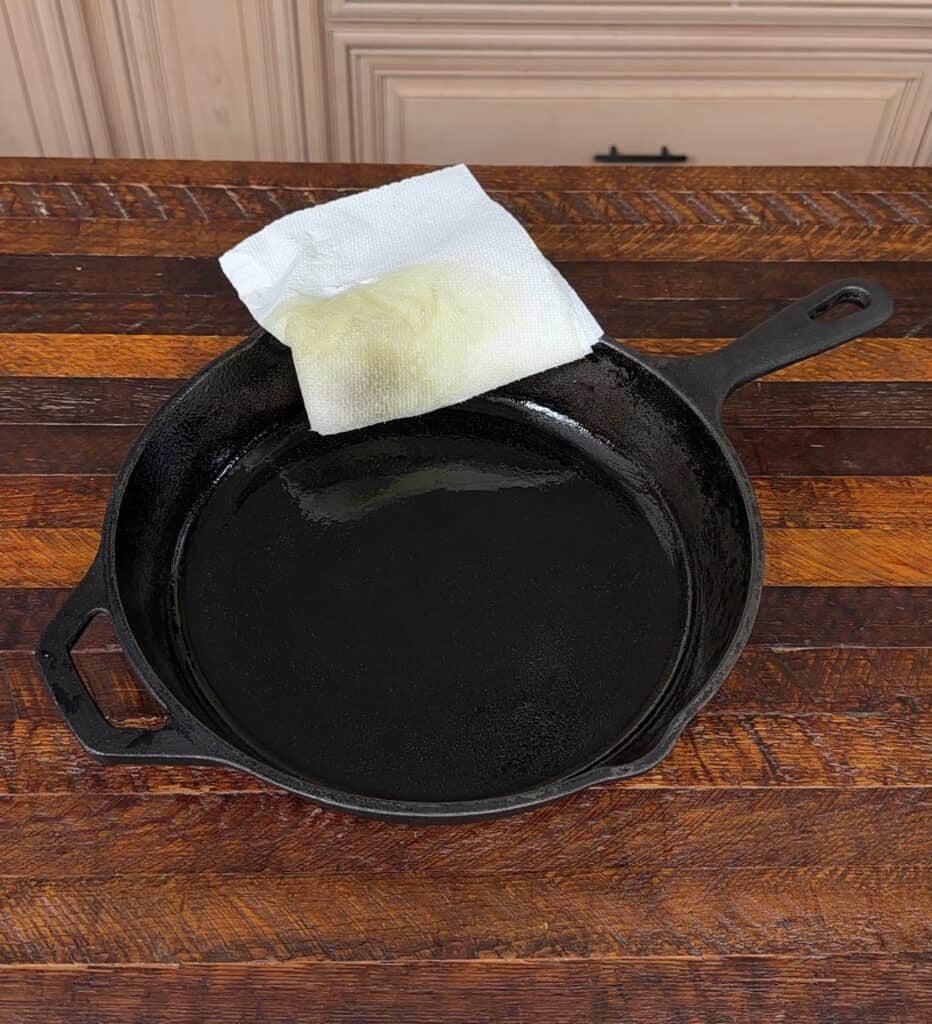
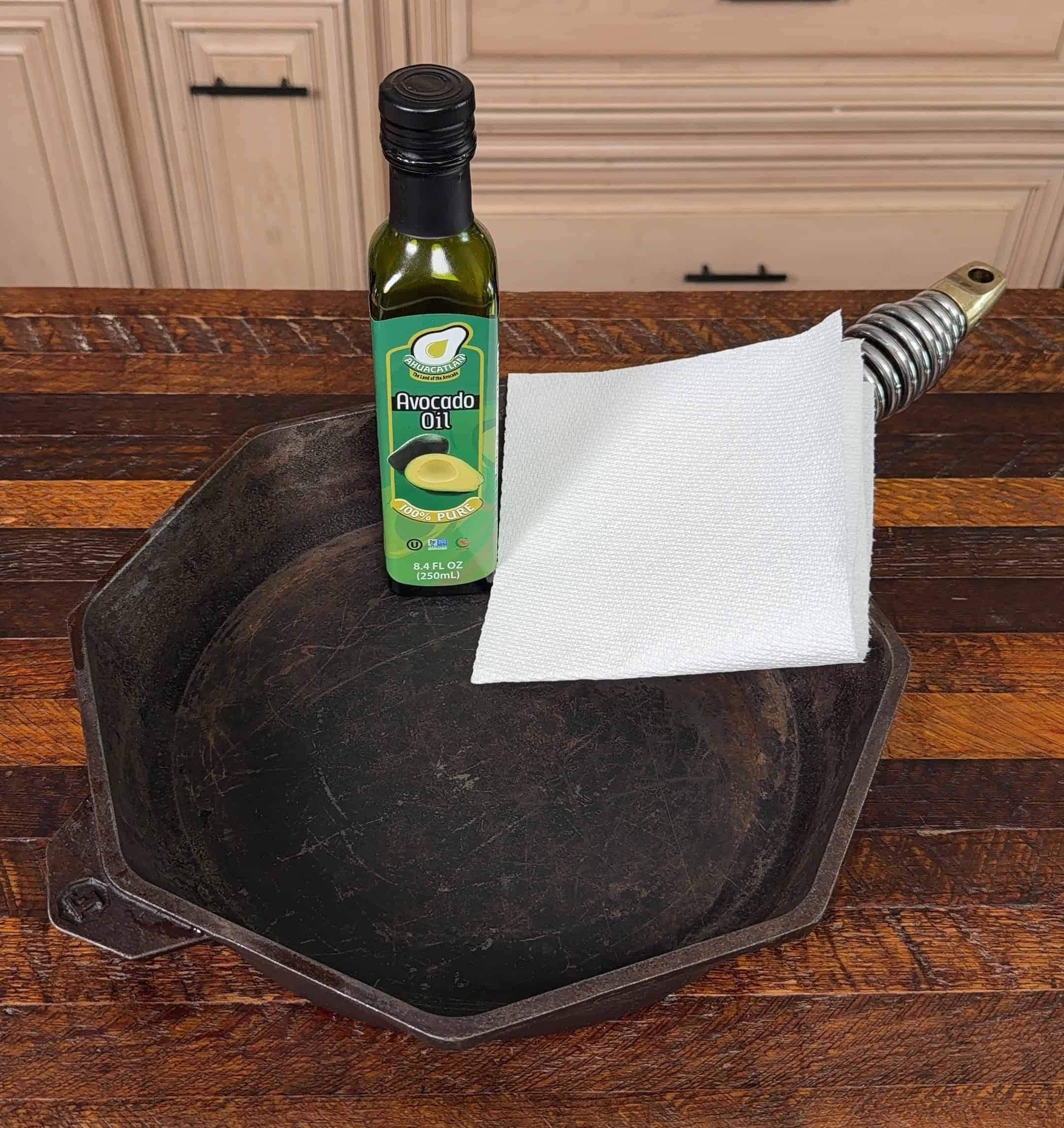
Once the skillet is clean and completely dry, apply a very thin layer of cooking oil to the cooking surface.
Use a paper towel to spread the oil evenly.
Here's the important part: you don't want the skillet to look wet or greasy.
After applying the oil, use a clean paper towel to wipe away any excess. The surface should have a very thin coating of oil rather than a puddle or thick layer.
This light coating helps protect the skillet and maintain its seasoning.
How To Season a Cast Iron Skillet in the Oven
Regular cooking and light oiling after cleaning are usually enough to maintain a properly seasoned skillet.
But sometimes your cast iron needs a little extra attention.
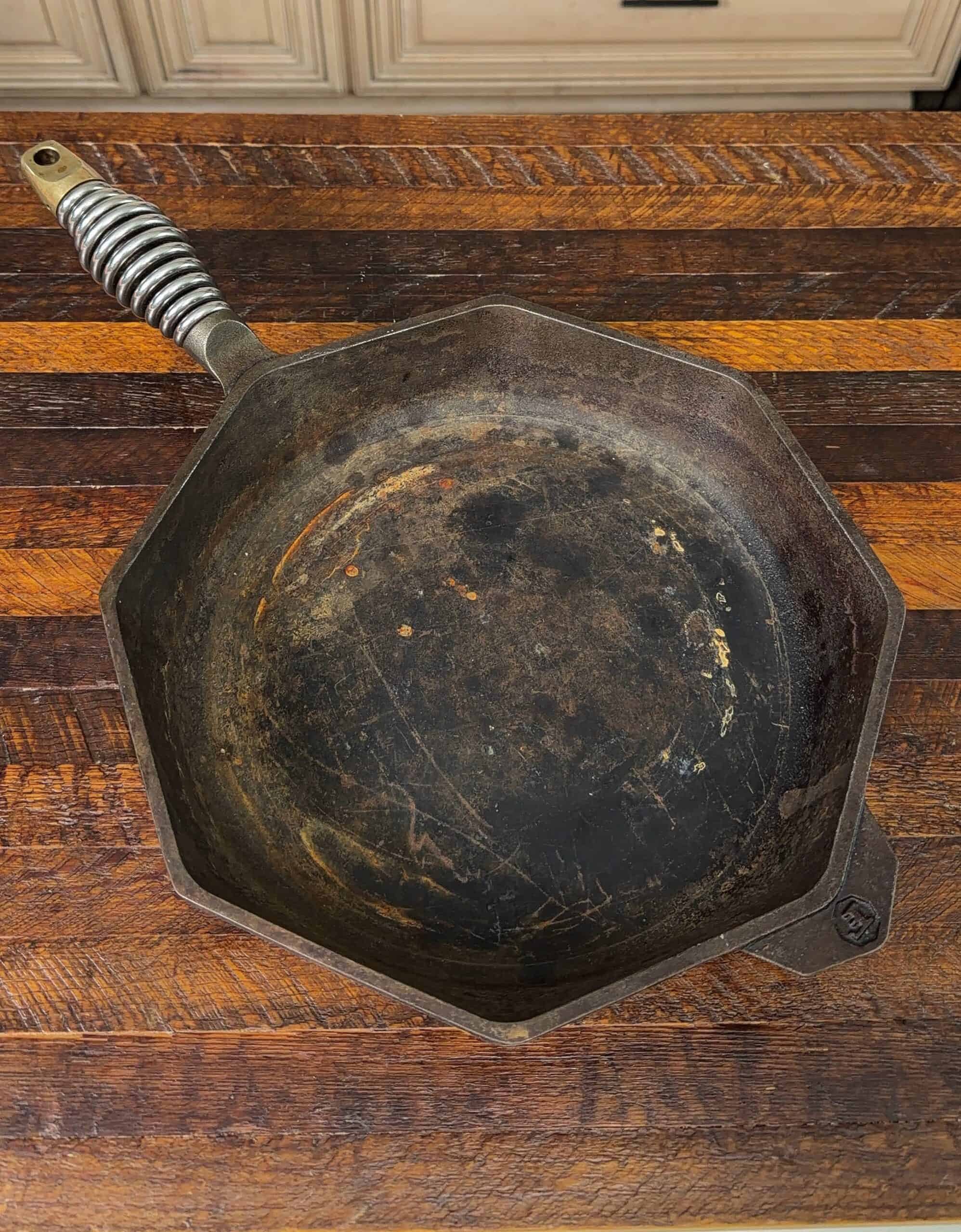
If the surface has become dull, food is sticking more than usual, or you've had to remove rust or damaged seasoning, you can season the skillet in the oven again.
Step 6: Wash the Skillet
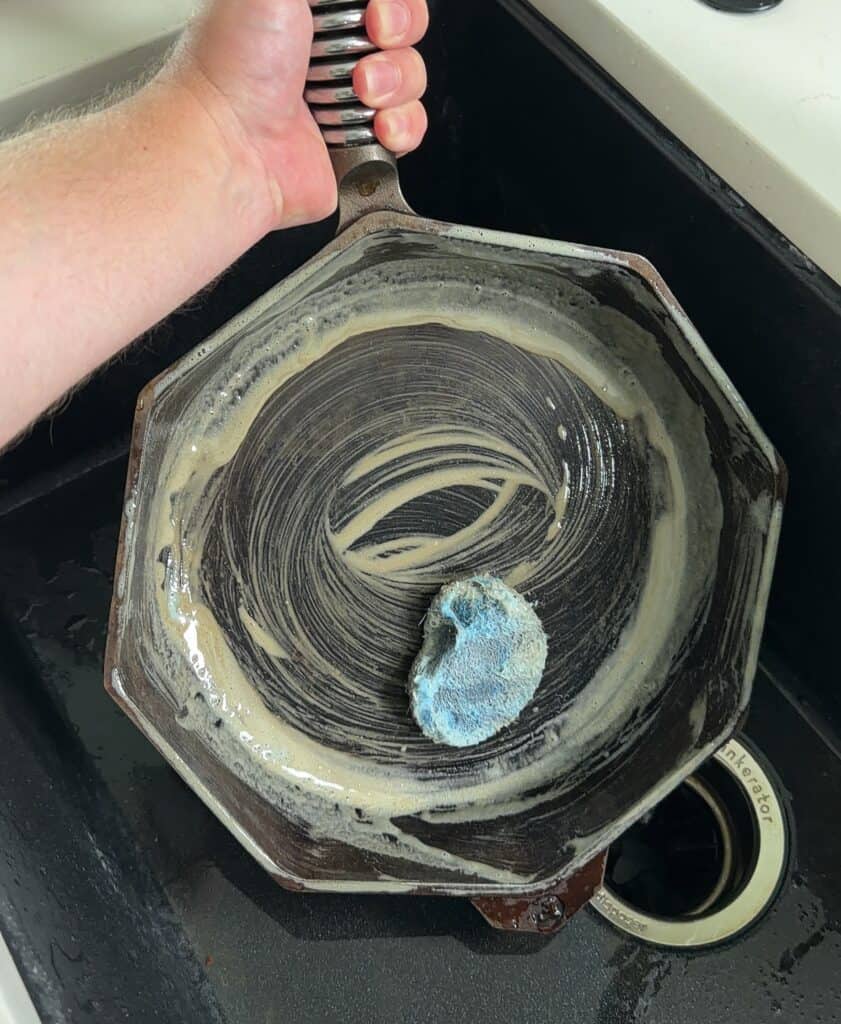
Start by washing the skillet with warm, soapy water.
Since you're about to reseason the pan, don't worry about using a small amount of soap during this step.
Dry the skillet completely.
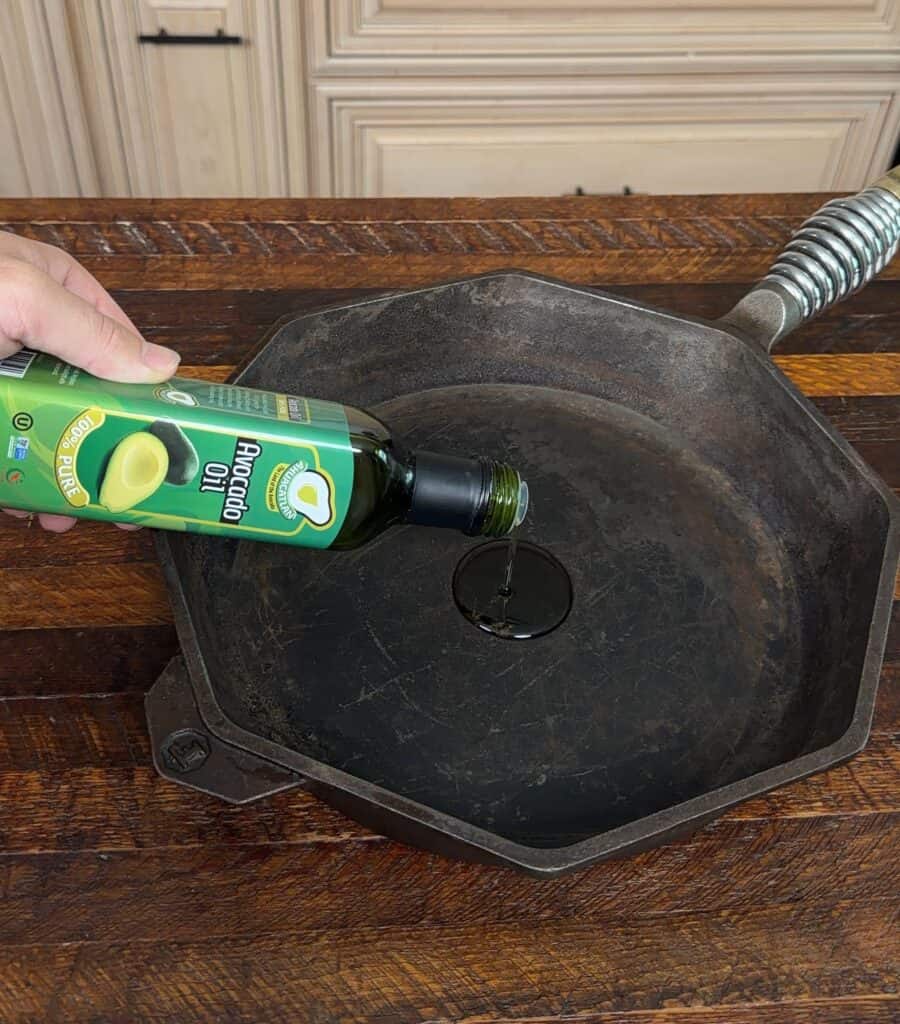
Step 7: Apply a Very Thin Layer of Oil
Using a paper towel or lint-free cloth, spread a thin layer of cooking oil over the entire skillet.
You can coat the cooking surface as well as the exterior.
Don't use too much oil.
Too much oil can leave you with a sticky or uneven finish. The goal is an extremely thin, even coating.
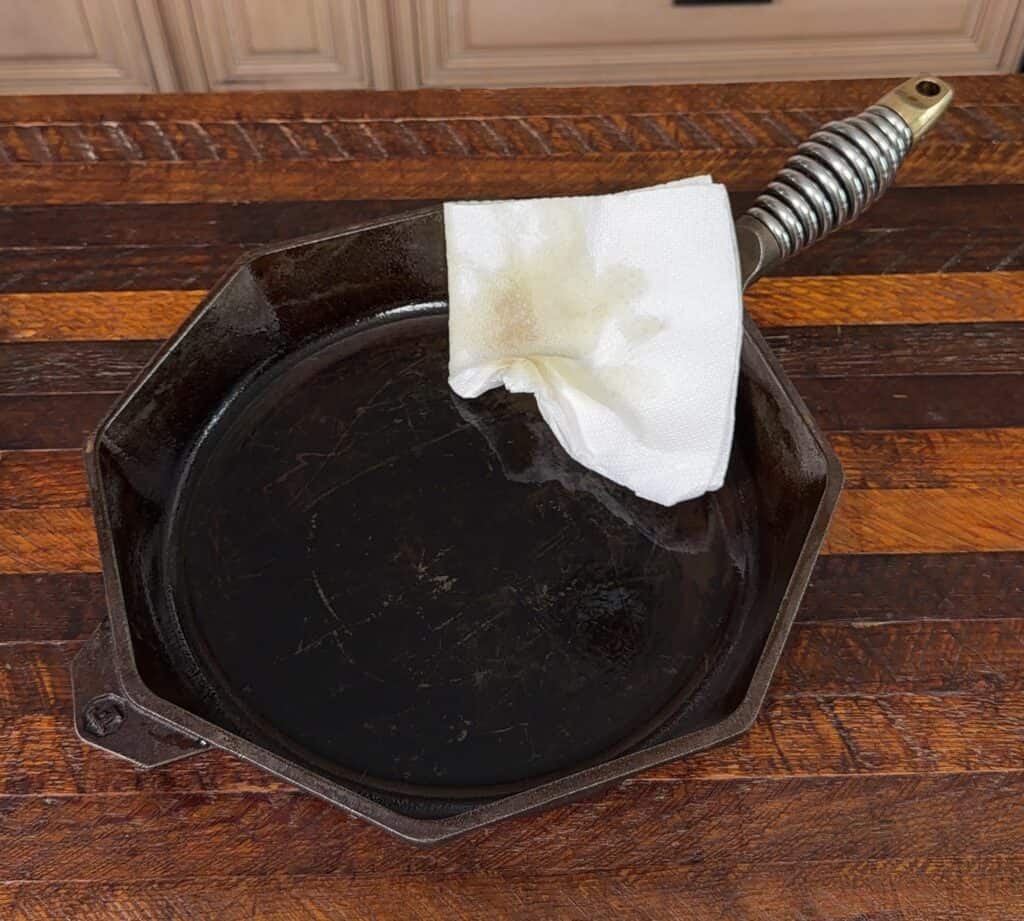
Step 8: Wipe Away the Excess
Take a clean paper towel and wipe the skillet again.
It may seem like you're removing all of the oil, but that's exactly what you want.
A thin layer is much better than a thick layer when you're seasoning cast iron.
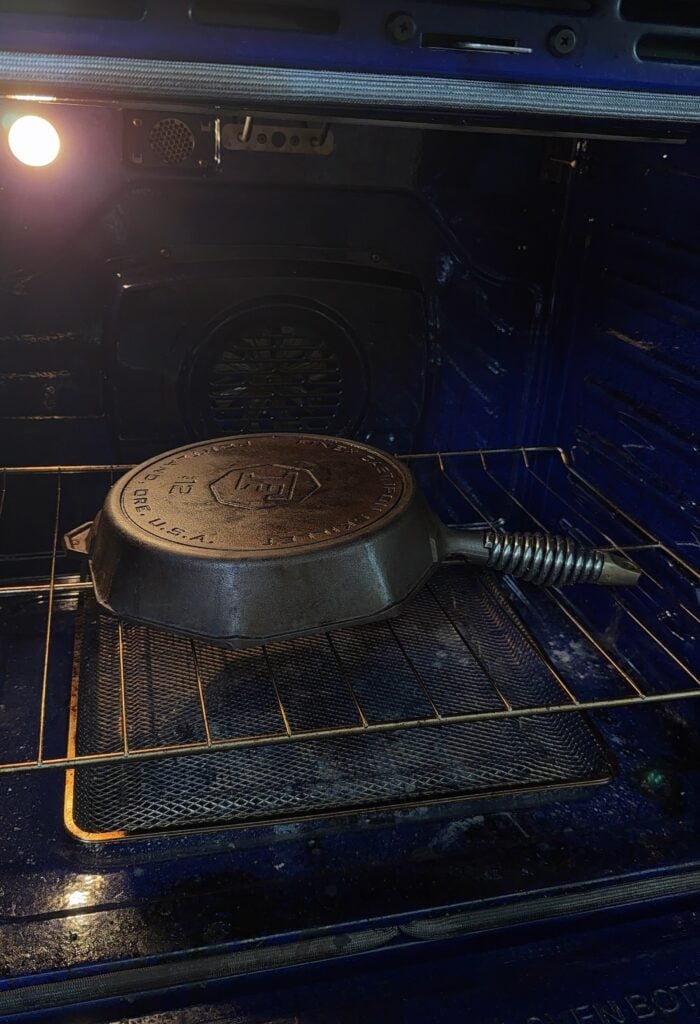
Step 9: Bake the Skillet
Preheat your oven to 450-500°F.
Place the skillet upside down on the center rack of the oven. You can place aluminum foil on the rack below to catch any oil that may drip.
Bake for 1 hour.
Placing the skillet upside down helps prevent oil from pooling on the cooking surface.
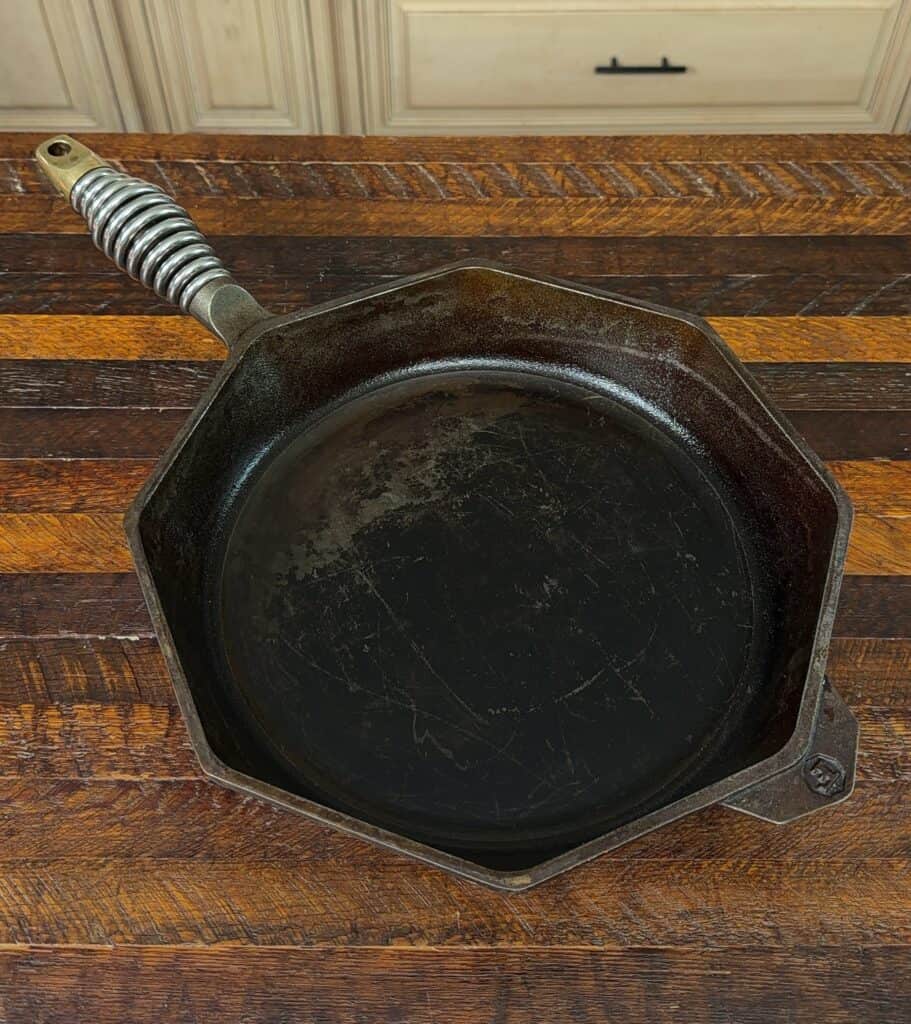
Step 10: Let the Skillet Cool
After the hour is up, turn off the oven and allow the skillet to cool inside the oven.
Once it's cool enough to handle, your cast iron is ready to use.
For a skillet that needs a more substantial seasoning rebuild, the process can be repeated to create additional layers.
How Often Should You Season Cast Iron?
The good news is that you don't need to completely reseason your cast iron skillet every time you use it.
In fact, the best seasoning is simply cooking with your skillet regularly.
Every time you cook with oil or fat, you're helping build additional layers of seasoning.
For everyday maintenance, simply:
- Wash the skillet.
- Dry it completely.
- Apply a very thin layer of oil.
If your skillet develops a dull appearance, starts sticking badly, or loses some of its seasoning, that's when a full oven seasoning can help restore the cooking surface.
Can You Use Soap on Cast Iron?
Yes!
This is one of the biggest myths surrounding cast iron.
A small amount of dish soap can be used to clean a properly seasoned cast iron skillet. The important thing is to avoid prolonged soaking and to dry the skillet thoroughly afterward.
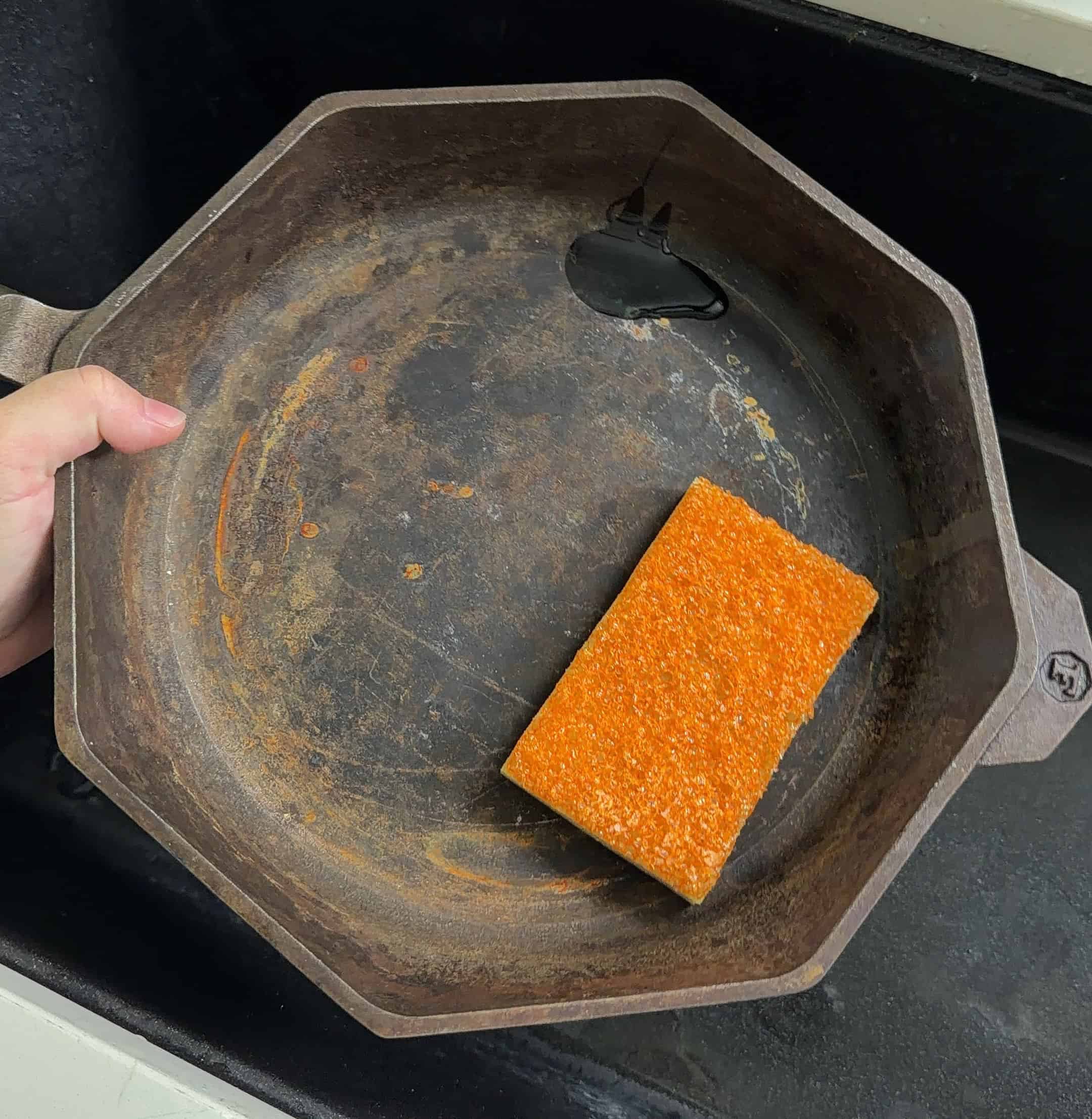
You don't need to be afraid of soap.
Can You Put Cast Iron in the Dishwasher?
No.
Cast iron should be washed by hand.
The combination of prolonged water exposure and dishwasher detergents can remove seasoning and encourage rust.
Hand washing only takes a few minutes and will help keep your skillet in great condition.
Can You Soak a Cast Iron Skillet?
It's best to avoid soaking cast iron.
If you have stubborn food stuck to the bottom, use a scraper or simmer a small amount of water in the skillet for a few minutes instead.
Leaving cast iron sitting in water increases the chance of rust developing.
How To Remove Rust From Cast Iron
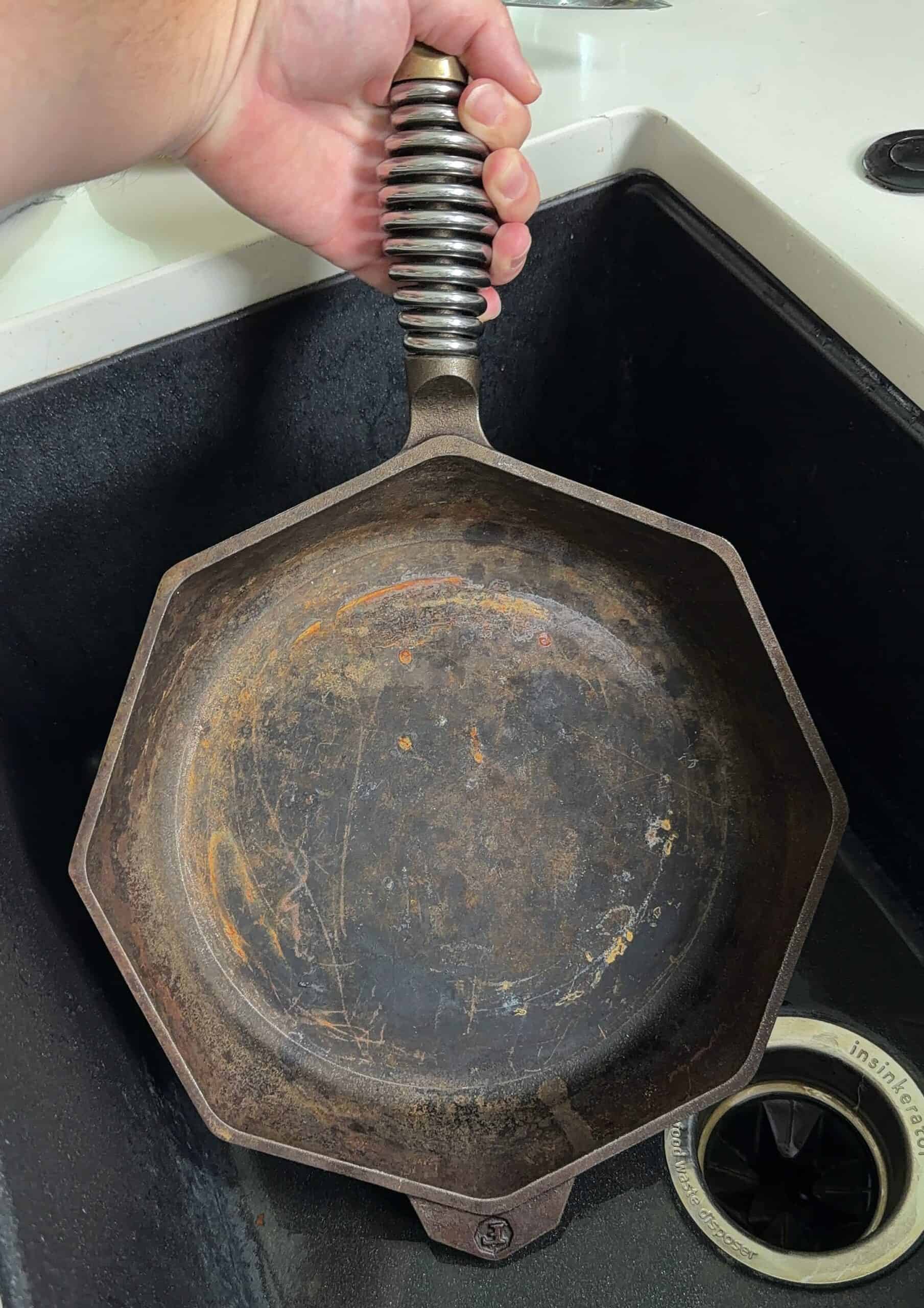
Don't throw away your skillet just because you see some rust.
Cast iron can often be restored.
Start by scrubbing the rusty areas with steel wool or another appropriate abrasive until the rust is removed. Wash the skillet with warm, soapy water and dry it completely.
Once the rust is gone, apply a very thin layer of oil and reseason the skillet in the oven.
A little rust doesn't mean your cast iron is ruined.
What If My Cast Iron Is Flaking?
If you notice black flakes coming off your skillet, don't panic.
Sometimes layers of seasoning don't fully bond to the surface and can begin to flake. In that case, scrub the skillet with a nylon brush or salt, rinse it, dry it thoroughly, and apply a light coating of oil.
If the problem continues, reseasoning the skillet in the oven can help rebuild the seasoning.
Common Cast Iron Mistakes
Keeping cast iron in good condition is easy, but there are a few mistakes worth avoiding.
Don't Leave It Wet
Moisture is one of the easiest ways to invite rust.
Always dry your skillet completely after washing.
Don't Soak It
A quick wash is all your skillet needs. Avoid leaving it submerged in water.
Don't Put It in the Dishwasher
Cast iron should always be washed by hand.
Don't Use Too Much Oil
When seasoning your skillet, more oil isn't better.
A very thin layer creates a better finish than a thick, sticky coating.
Don't Be Afraid To Cook With It
This might be the most important tip of all.
Use your cast iron!
Cooking regularly helps build and maintain the seasoning, so don't leave your skillet sitting in the cabinet because you're worried about damaging it.
What Are the Best Foods To Cook in Cast Iron?
Once your skillet is clean and properly seasoned, it's ready for just about anything.
Some of my favorite things to make in cast iron include:
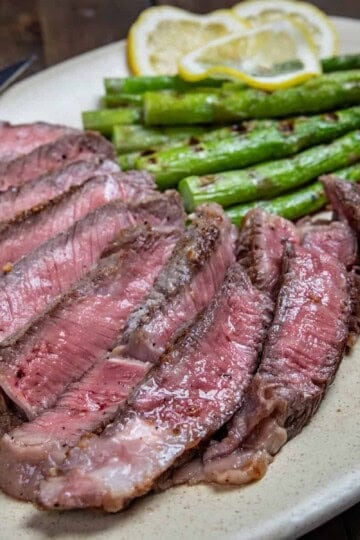
- Steaks
- Smash burgers
- Bacon
- Fried chicken
- Cornbread
- Fajitas
- Roasted vegetables
- Breakfast potatoes
- Eggs
- Grilled cheese
- Sautéed vegetables
- Skillet desserts
- Pizza
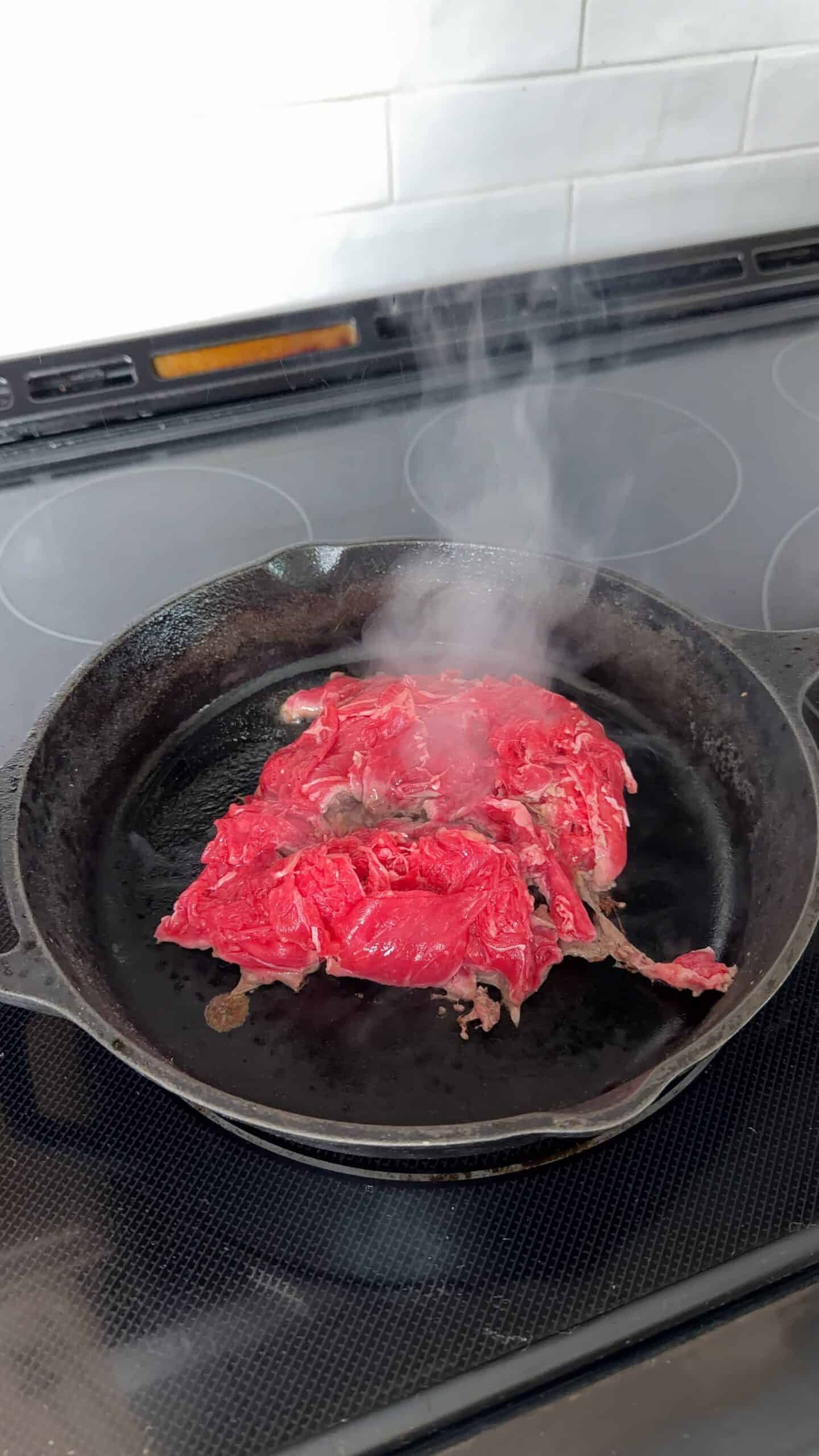
Cast iron is especially great for recipes that benefit from a hard sear or even heat retention.
Final Tips for Cast Iron Care
Taking care of cast iron doesn't have to be complicated.
Remember these three words:
Wash. Dry. Oil.
Wash your skillet by hand, dry it completely, and finish with a very thin layer of oil.
If your skillet needs more attention, give it a full oven seasoning at 450-500°F for 1 hour and let it cool in the oven.
And most importantly, don't be afraid to use your cast iron. The more you cook with it, the more seasoning you naturally build.
A properly cared-for cast iron skillet can become one of the most dependable pieces of cookware in your kitchen and with the right care, it can last for generations.
Cast Iron Skillet Care FAQs
How do you clean a cast iron skillet?
Wash the skillet by hand with warm water and a small amount of dish soap if needed. Scrub away food residue, rinse, dry completely, and apply a thin layer of cooking oil.
What is the best way to season cast iron?
Apply a very thin layer of cooking oil to a clean, dry skillet and bake it upside down in a 450-500°F oven for about 1 hour. Allow it to cool in the oven.
Can you use Dawn dish soap on cast iron?
Yes. A small amount of modern dish soap can be used to clean seasoned cast iron without ruining the seasoning.
How often should you season a cast iron skillet?
You don't need to fully reseason cast iron after every use. Regular cooking with oil naturally builds seasoning. A full oven seasoning can be done whenever the skillet needs additional protection or its cooking surface has deteriorated.
Why is my cast iron skillet sticky after seasoning?
A sticky surface is often caused by applying too much oil. When seasoning cast iron, use an extremely thin layer and wipe away excess oil before placing the skillet in the oven.
Can cast iron go in the dishwasher?
No. Cast iron should be washed by hand to help protect the seasoning and prevent rust.
Can you use steel wool on cast iron?
Steel wool can be useful when restoring a rusty skillet, but it's generally not necessary for everyday cleaning. For normal cleanup, use a stiff brush, non-scratch scrubber, or pan scraper.


Leave a Reply