

Cleaning a flat top grill is a key part of keeping it in top shape. Whether you're a seasoned outdoor cook or just starting, routine cleaning helps preserve your grill and ensures your food always tastes its best.
Comparing Flat Top Grill Surfaces: Pros and Cons
Different flat top grill surfaces offer unique benefits, and it's important to choose one that suits your cooking needs.
Cast Iron
- Pros: Retains heat exceptionally well, creating a great sear. Durable when seasoned properly.
- Cons: Prone to rust if not maintained, requires regular seasoning.
Rolled Steel
- Pros: Similar to cast iron in heat retention but lighter. Builds a non-stick surface over time.
- Cons: Can rust if left exposed to moisture, also requires seasoning.
Stainless Steel
- Pros: Corrosion-resistant, easy to clean, no need for seasoning.
- Cons: Less heat retention compared to cast iron or steel.
Porcelain Coated
- Pros: Non-stick surface, rust-resistant, easy to clean.
- Cons: Prone to chipping, less durable over time, not ideal for very high heat.
Choosing the right surface for you depends on priorities such as durability, maintenance and heat retention.
Commercial vs. Consumer Flat Top Grills: Which Should You Buy?

When comparing commercial and consumer flat top grills, performance is a key differentiator.
Performance Characteristics
- Commercial Grills: Designed for high heat output and constant use, making them ideal for restaurants and catering. They typically offer larger cooking surfaces, faster preheating, and more consistent temperature control.
- Consumer Grills: While they can handle home cooking needs, they may not reach the same temperatures or provide the same level of durability. They are suitable for occasional use, providing versatility for backyard cooking without the need for heavy-duty features.
Price Differences
- Commercial Grills: Typically range from $1,000 to $5,000 or more, designed for heavy-duty use in restaurants and catering environments.
- Consumer Grills: Generally priced between $200 and $1,000, suitable for home use and smaller gatherings.
Choosing the Right Grill
- Commercial Grills: Best for those who plan to use their grill frequently, need high heat output, and want durable materials to withstand constant use.
- Consumer Grills: Ideal for occasional users or families, offering versatility without the hefty price tag.
Assess your cooking frequency and budget to find the best fit for your needs!
Tools and Supplies You'll Need
Thorough cleaning of your flat top grill is essential for both longevity and performance. It prevents rust from forming on the surface, keeps your food tasting fresh, and ensures that your grill operates at its best every time you fire it up.
Essential Cleaning Tools:
- Grill Scraper: To remove food residue and debris.
- Griddle Brush: For scrubbing the surface.
- Dish Soap: To break down grease and grime.

Optional Cleaning Supplies:
- Grill Bricks: For a deep, abrasive clean.
- Steamers: Help loosen tough, stuck-on residue.
Step-by-Step Guide on How to Clean a Flat Top Grill
The best way clean the surface of the grill is after it's been hot. If you're not cleaning the entire surface right away after cooking on it, turn it on high and let it get hot. This will loosen the leftover food debris and make it easier to clean.
Step 1: Prepping the Grill for Cleaning
Once your grill is piping hot, turn off the heat. A hot griddle surface makes it easier to loosen stuck-on debris.
Step 2: Scraping Off Food Residue
Use a grill scraper or bench scraper to remove excess food particles and grease. The surface is still giving off residual heat, so if you have heat-resistant gloves, wear them for added protection here. Scrape grease and food bits toward the grease trap opening for effective cleaning.
Step 3: Pour Water on the Grill Surface
Slowly pour warm water on to the hot surface of the flat top grill to break down excess grease and grime. Use the scraper again, as the water evaporates, to get any stuck-on food bits.
You can repeat this step on the griddle plate a few times, depending on how stubborn the stuck-on food debris is being. You will want to go with a little bit of water at a time. Most of your caked on food will loosen up just with some water poured over the hot griddle.

We use warm water here instead of cold water so the drastic temperature change doesn't shock the surface of the grill, which can cause the metal to warp.
You don't want to flood the griddle top so the water just flows into the grease tray. A little at a time to scrape while it evaporates will do. The excess oil will evaporate with the water as well. You can use a spray bottle if you like, but any old cup will do.
Step 4: Scrub the Grill Surface
Using a griddle brush, scrub brush or non-abrasive scouring pad, scrub the grill in a circular motion to lift away any remaining residue.
There are specialty scrubbers - like a grill stone or grill brick - made for particular griddle surfaces, so be sure it's rated for your flat top surface's materials - whether that's rolled steel, cast iron or porcelain coated.
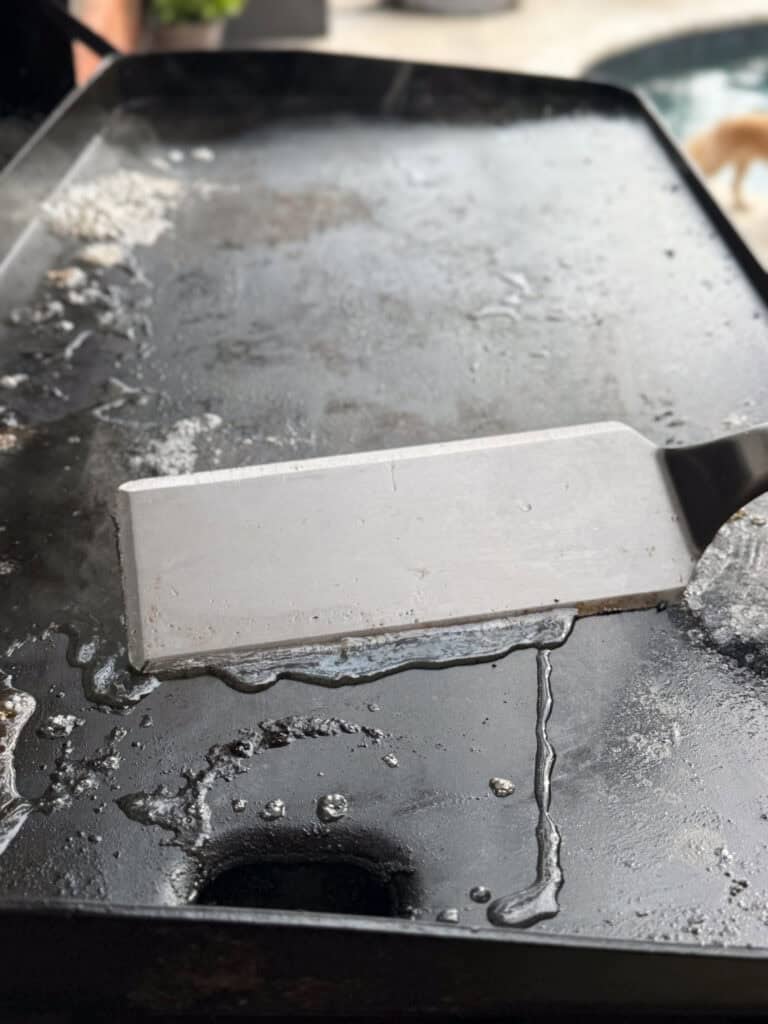
I use a long metal spatula to push the water and loose food into the grease tray.
Step 5: Wipe the Flat Top Grill Clean and Dry
Once you've scraped and scrubbed off the entire cooking surface, wipe dry with clean paper towels. If the surface is too hot, fold a paper towel around the end of a flat-edged metal spatula or on some tongs and wipe in a linear motion.
This should clean off any remaining residue and dry the surface so it doesn't rust. Push any burnt bits into the grease tray.

Step 6: Seasoning the Grill After Cleaning
Once dry, apply a thin protective layer of cooking oil to the flat top to prevent rust and maintain its non-stick surface, keeping it ready for your next cooking session! You should use oil with a high smoke point, Avocado oil is my favorite choice.
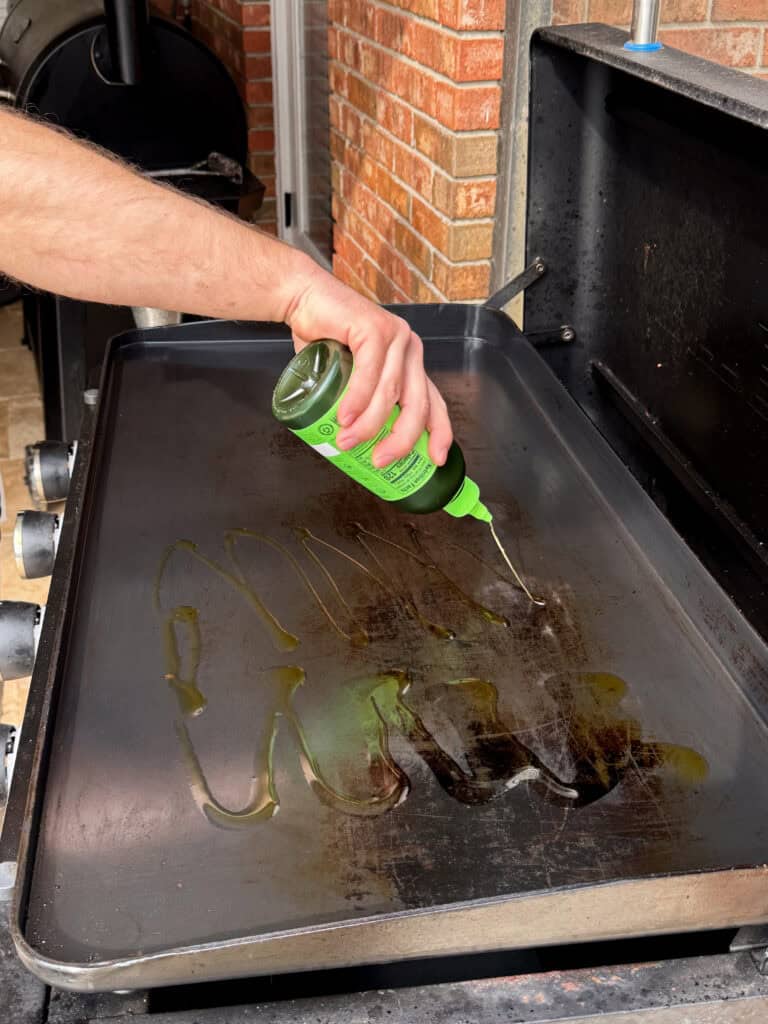
Wipe the oil evenly across the grilling surface. If there's excess oil, wipe up with more paper towels until a thin, even layer remains.
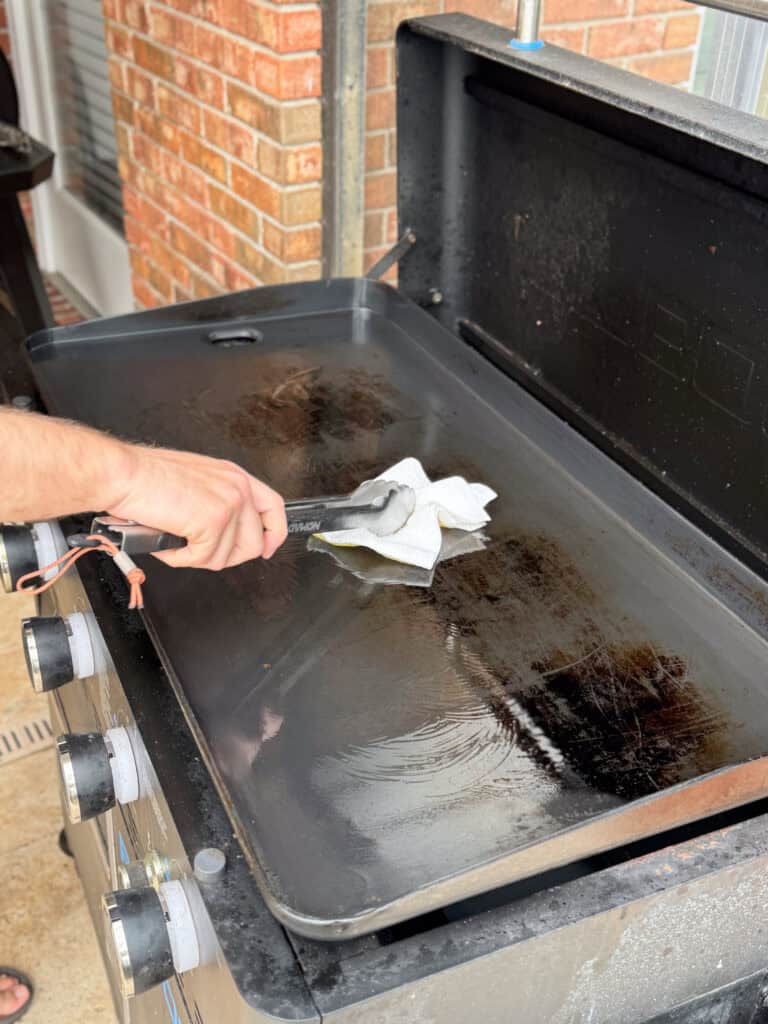
Let your clean flat top grill cool completely before covering and storing it for the next time.
How Often Should You Clean a Flat Top Grill?
The frequency of cleaning your flat top grill depends on how often you use it. For light, occasional use, a quick clean after every cooking session is sufficient. However, if you're using your grill regularly-such as daily or for large meals- a deep cleaning is recommended at least once a week.
A daily wipe-down prevents buildup, while more intensive scrubbing helps maintain the grill's condition and prevents stuck-on food residue from affecting the taste of your dishes.
Common Mistakes to Avoid When Cleaning a Flat Top Grill
When cleaning your flat top grill, there are a few common mistakes that can damage the surface or affect future meals.
Using Harsh Chemicals
Avoid using strong chemicals like oven cleaner or bleach, as they can damage the surface and affect the taste of your food.
Letting Water Sit on the Grill
Leaving water on the surface can cause rust to form. Always dry your grill thoroughly after cleaning.
Forgetting to Re-season
Not applying a layer of oil after cleaning can lead to a sticky surface and rust. Always re-season to maintain a smooth, non-stick grill surface.
FAQs About Cleaning a Flat Top Grill
Can I use vinegar to clean my flat top grill?
Yes, vinegar is a great natural cleaner for grills. It helps break down grease and removes food residue without harsh chemicals.
What's the best oil to season a flat top grill?
High smoke point oils are ideal for seasoning. Some of our favorites include natural fats like beef tallow or pork lard, or high-smoke point vegetable oils like peanut oil or avocado oil.
Oils that burn at lower temperatures tend to gunk up the natural protective patina on the cooking surface. This can cause your food to stick and taste rancid the next time you cook.
How do I prevent rust on my grill?
Clean and dry your grill after each use, then apply a thin coat of oil to protect the surface from moisture and rust. It won't take much time to dry if you follow along with the steps and keep a clean griddle covered and out of the elements.
Can I use water to clean my grill?
Yes, but never let water sit on the surface for too long. Always wipe it dry to prevent rust from forming.
Final Thoughts on Cleaning Your Flat Top Grill

Keeping your flat top grill clean is essential for maintaining its performance, extending its lifespan, and ensuring your food always tastes its best. By following a routine cleaning process, using the right tools, and avoiding common mistakes, you can keep your grill in top condition for years to come.
Whether you're grilling burgers, stir-frying veggies or making pancakes, a clean grill ensures consistent cooking results and a smooth grilling experience every time. So, make cleaning part of your grilling routine, and enjoy the benefits!


Leave a Reply